Monday, August 12, 2019
24-7 Spyz - The Soundtrack to the Innermost Galaxy
Bronx-based black rock group 24-7 Spyz have been operating on the fringes of the mainstream for more than 30 years now, doggedly practicing their own particular musical gospel - a spicy blend of hard rock, metal, punk, soul, funk and even reggae and R&B - to those fortunate enough to have encountered it. Over the course of 6 albums they have persevered through lineup changes, record label mismanagement, and general public indifference to deliver material that, while not as consistently strong song-to-song as one might hope, was always a welcome respite from the tidal wave of grunge and nu-metal that dominated the popular rock landscape throughout the 90s. Now, 13 years have passed since their last album, and the Spyz have returned to a vastly different musical and cultural landscape to deliver The Soundtrack to the Innermost Galaxy, a joyous and ebullient collection of diverse songs that show the band in perhaps the best form of their long career.
Things begin with a quick, silly introduction (a modern Spyz tradition) before quickly establishing the playbook with "Anthem". Guitarist and singer Jimi Hazel delivers propulsive riffs as the other members of the group make their presence felt musically as well as vocally - bassist Rick Skatore, drummer Phil "Fish" Fishbone (the mastermind behind black rock brothers in arms Fishbone), and guitarist Ronnie "Head" Drayton - as the track shifts between Pantera-esque grooves and guitar solos to hip-hop, all while maintaining a goofy tone. The Spyz seem loathe to limit themselves to any one single genre as the album continues, moving through the brilliantly melodic heavy R&B on "Brothers and Sisters", the African psychedelia of "Ascension", to the stomping protest piece "Repeating Myself" and the breathlessly exuberant Gospel sentiment of "Thank You". There is a general warmth and confidence on display here that is quite impressive considering the time gap between this and the bands' previous record - Jimi Hazel's singing has only gotten better with age and his playing is as good as I've ever heard it.
I'm not able to get a dynamic range score at the moment for Soundtrack to the Innermost Galaxy, but I haven't experienced any noticeable symptoms of over compression or brickwalling in my time with it so far, in either MP3 or CD form. Mixing-wise, the album is quite good considering how tough the balancing act of these 2 excellent (and loud) guitar players, along with bass, drums, and oftentimes multiple vocalists all fighting for space at the same time. Discovering that Terry Date was once again on hand to mix the album was a great surprise as he clearly understands what type of sound the Spyz are looking for.
I could go on about Soundtrack to the Innermost Galaxy, but suffice it to say that it's something special. If you consider yourself a fan hard rock, metal, soul, or just bands with a unique sound, 24-7 Spyz have really delivered something worth checking out here. I only hope that it won't take 13 more years for the followup.
Sunday, May 26, 2019
Alan Parsons - The Secret
It's difficult to think of a producer who has had a hand in as many memorable albums as Alan Parsons - from his work at Abbey Road Studios with The Beatles and Pink Floyd, his production roles with The Hollies, Al Stewart and others, as well as his own solo records and collaborative band with Eric Woolfson, The Alan Parsons Project. His imprint on an albums' sound is wonderfully consistent and instantly recognizable: softened drums, lush string arrangements, layered vocal harmonies, and an all-encompassing warmth that envelopes the listener like a favorite blanket.
Returning with his 5th solo album and his first in 15 years, The Secret, if nothing else, is a textbook Alan Parsons experience. Fans of his work in the 70s and 80s with his Project will find themselves right at home amidst the soft pop on offer here, which makes up the bulk of the material. As usual there is a light flourish of art rock adornment to be found - particularly on album highlight "One Note Symphony" and the opening track "The Sorcerer's Apprentice". The majority of the album rests squarely in the soft pop category of Parson's wheelhouse, and longtime Project listeners will no doubt find the driving guitar-lead chug of "Miracle" and "As Lights Fall" reminiscent of Eye in the Sky-era Parsons Project.
While the album as a whole sounds excellent, I find that some of the songwriting decisions don't quite work out. "As Lights Fall" features Alan Parsons tackling the lead vocal role himself quite capably, but on "One Note Symphony" his vocal harmonies are noticeably off-key. Another trademark element of Alan Parsons Project albums is the rotating cast of singers, a feature that has been carried along onto The Secret, and I have few complaints with the roster Alan has assembled here. Jared Mahone ("I Can't Get There from Here"), Todd Cooper ("One Note Symphony", "Requiem"), and Mark Mikel (The incredibly Lennon-esque "Fly to Me") are my personal standouts and all deliver their performances wonderfully. The sole stumbling blocks come in the form of the bizarre inclusion of Foreigner's Lou Gramm on the ballad "Sometimes", a song that manages to be excessively schmaltzy even for an Alan Parsons album. The more I hear the track the more I think that fellow Brit Elton John would have been much more suited to the melody and desired delivery style, as Gramm's warbly vibrato distracts me more than enchants me.
The last couple of songs are fine, but nothing incredible. Songwriting was never Alan Parson's talent in the past, and The Secret doesn't do much to change that perception - there are few surprises here in terms of arrangement and composition. What The Secret makes up for in raw pop writing, however, is pure production value and dynamic range - even the weaker tracks here resonate with Parson's enhancements. Take the gorgeously overblown saxophone and piano tracks anchoring Todd Cooper's vocals on "Requiem", the string orchestration providing accent to P.J. Olsson's suave vox, or Alan's airy vocal harmonies in "Soiree Fantastique" - each track has been meticulously engineered and recorded to provide the richest listening experience possible. And that listening experience is Alan Parson's true legacy, because whenever the songwriting takes a dip or the lyrics get chintzy, you can always rest assured that the bottom line standard of what an acceptable sounding song is, will never drop too far below "fine". Mostly hits, a couple of misses, but The Secret as a whole is such a production treat to savor that it never feels aggressively out of place or overstays its welcome, clocking in at a modest 48 minutes. If you're a fan of the Alan Parsons Project or just excellent sounding records, The Secret is definitely worth your time even if it stumbles a couple of times before reaching the finish line. After all, who doesn't?
Saturday, May 11, 2019
Dream Theater - Distance Over Time
I'm not sure if listening to too much Steven Wilson/Alan Parsons-engineered albums recently have made my ears into production snobs, but I cannot bear to listen to this album the whole way through. I can't tell you how many times I've thought to myself "You can do this, no problem, it's really not that bad", pressed play, and turned it off after 2-3 songs. I'm not sure how much blame rests with the music itself but in either case, this album was not engineered well.
And the songs themselves? Actually, I enjoy a couple of them. "Paralyzed", "S2N", and "Room 137" probably crush live, and when the band commits to the huge riffs that Petrucci throws out, it works pretty well. Other than that, nothing very memorable. John Myung's bass tone is loud and muddy, the drums are as cold and flat as cell wall, and James Labrie sounds... odd. Not bad necessarily, just that some of his vocal lines sound strange, like they weren't sure if some of these songs would work better as instrumentals or not, and threw together some quick vocal melodies just in case. "At Wit's End" is also pretty enjoyable, but again, the mix drowning you in guitar while also seemingly never getting louder or any softer for the whole runtime just makes everything blur together - no quiet time means that none of the big crescendo moments land as well as they should. So yeah, a couple of good moments (especially the outro of "S2N", holy shit that's good) amidst a sea of heavily compressed, semi-memorable Dream Theater material.
Sunday, November 4, 2018
Haken - Vector
One of modern progressive metal's shining lights, Haken has returned after a nearly three-year gap with their next stage of musical evolution, entitled Vector. A band that somehow managed to pay their dues to progressive legends past (Dream Theater, Yes, King Crimson, etc.) while creating an atmosphere all their own, Haken has leapfrogged between studio releases with an ever-present eye towards the musical horizon, cunningly incorporating such disparate styles and artist touchpoints as the ever-underrated (and fellow Englishmen) Gentle Giant, 80's synth-based pop, and most explicitly on Vector, an increasing interest in Djent-scented riffs and grooves. With Vector, Haken have not only delivered on the art rock contract to which they are bound with overlong technical passages, numerous solos and song lengths frequently eclipsing the six minute mark, they've opted to do it in the span of just forty-five minutes, otherwise known to the larger listening public as "typical album length". While the considerably shorter runtime has been a point of contention among fans (previous Haken albums regularly ran past the sixty minute mark), Vector demonstrates an ability that seems absent from many bands: a willingness (or ability) to condense your sound, cut back on your keyboard patches and pre-chorus instrumental fingering exercises to deliver quality songs with quality musicianship. With Vector, Haken has achieved both.
Starting things off with a brief, atmospheric introduction in "Clear" before moving right into the high-intensity percussive force of "The Good Doctor", Vector wastes no time getting into the thick of it. "The Good Doctor" is denser and noticeably heavier than previous opening pieces like "Atlas Stone" and "Nocturnal Conspiracy", and reminds me quite a bit of "In Memoriam" with its mixture of stop-start riffing and memorable vocal lines, a tangled knot of tricky time signatures and instrumentation, topped by a great little crown of a chorus. The group then directly sets off into "Puzzle Box", a song that is eminently suffused with the modern Haken™ sound in a beautiful way: excellent keyboard work from Diego Tejeida, loping bass grooves from Connor Greene, and perhaps the band's best outro yet. "Veil", the longest track on the album and something of a centerpiece that the other songs revolve around, begins with some gorgeous harmony vocals before moving afield through several distinct sections and passages, a hugely satisfying chorus plus a bit of atmospheric multi-part vocals towards the end that recalls "The Architect". While it's the lengthiest piece to be found here, it clocks in at a svelte dozen minutes that go by far too quickly. "Veil" is easily my favorite track on Vector and is certainly one of the greatest songs Haken have written. (The whole band is in top form on Vector but drummer Ray Hearne deserves special mention. I'm not sure if it's a result of the band's more collaborative songwriting approach recently or just a quirk of the material here, but either way the drumming is a noticeable cut above their previous albums).
After "Veil", Vector is actually pretty close to wrapping up. "Nil By Mouth" is crunchy instrumental workout that showcases Diego's keyboard work quite well, in addition to being surprisingly groovy. The boys pump the brakes a bit with "Host", a moody ballad decorated with flugelhorn and organ before concluding with "A Cell Divides", a distinctly Leprous-tinged track with another great chorus as well some cryptic lyrics and atmospheric samples that give it a bit of a sinister air. I haven't touched on the lyrics because Vector is a concept album but I have almost no idea of what is happening in terms of story, although I did find the lyrics to be mostly on the same quality level as Affinity, which is welcome, with less of that traditional prog rock cheesiness that so often seeps into this type of music. If this review seems a bit terse, it's because truthfully I find it difficult to say much about Vector that won't make itself evident upon listening to it: it's a fantastic piece of work that asks quite little of the listener by only running for three of quarters of an hour from start to finish. Haken have managed to successfully distill and refine their sound on Vector and only seem to be getting more confident and clever with each new album, and I'm very curious to see where they go from here.
Tuesday, October 16, 2018
Empire At War: Thrawn's Revenge
![]() |
| Source: thrawnsrevenge.com |
While Electronic Arts' Star Wars: Battlefront games tend to draw most of the water when it comes to the recently revitalized franchise's space in the console video game market, a more unassuming title holds the bestseller crown on the PC platform: a real-time strategy game released in 2007 called Star Wars: Empire at War. Set in the period just before and covering the events of Episode IV: A New Hope, Empire at War was a quietly competent strategy experience with an outsized modding community owing to the massive Star Wars Expanded Universe (now known as "Legends"). That community has carried the flame for over ten years while numerous mod projects have come and gone, covering everything from the Clone Wars to the Old Republic, all the way into the Legacy Era (my personal favorite period). Sadly, Empire at War's multiplayer servers were brought offline after the demise of GameSpy in 2014 and official support from developer Petroglyph Studios also came to a halt. With EA shifting focus to its Battlefront series and a larger shift of interest away from traditional RTS games towards MOBAs, it seemed like Empire at War was destined to join the hefty pile of forgotten Star Wars licensed games - until a surprise announcement in the summer of 2017 appearing from Disney and Petroglyph trumpeted the return of multiplayer support for the title as well as numerous bug fixes and modern quality-of-life improvements.
Buttressed by the unlikely revival, the game received a fresh wave of interest thanks to integration with Steam as well as the the current wave of new films, resulting in a wave of updates bringing long-dead mods up to current spec as well as a shot to the arm of several in-progress mods, one of which being Thrawn's Revenge. In some form of development since at least 2014, Thrawn's Revenge is, to me, the most impressive mod available for Empire at War because it is one of the few projects that has emerged out the other end of all these years with a fantastic and impressive breadth of new features and content while holding itself to a sheen of polish and professionalism that is sadly absent in most fan-created work. I'll go over the broad strokes of the mod here but I encourage you to check out their website or Steam page to learn more.
A New Era
The biggest change introduced in Thrawn's Revenge is the "Era System", which replaces the base game's Tech System. In vanilla Empire at War, different factions have different methods available to them of advancing their "tech level", which governs what units and structures they can build, with higher tech levels granting access to more powerful units in a linear progression. Under the Era System in the mod, the death of the current Imperial leader (usually) results in the era shifting into the next one, from 1 to 5, changing the available units and heroes for certain factions depending on the specific era. For example, in later eras the New Republic gains access to more modern battleships that rival the Imperials, whereas the Imperial Remnant only gets weaker as the eras progress. Recently the Remnant faction was given the option to force an era change for a hefty cost, meaning that now there is a great push/pull dynamic between the different factions and their goals.There's a laundry list of countless other changes, tweaks, and additions that can be viewed at the Thrawn's Revenge website, but to wrap this up I'll briefly go over the different factions available to play as in the mod. There are a couple of others besides these that are either in progress or simply emergent AI factions meant to spice up gameplay, and more information on them can also be found on the website.
New Republic
The updated New Republic faction takes the place of the Rebels from the base game, and is the only faction in the mod that only improves as the eras advance. Early days see them with their characteristic roster of X-Wings, Mon Calamari cruisers and Nebulon-Bs, while the later few eras show off more advanced units and heroes only seen in expanded universe material (like much of Thrawn's Revenge). While the Empire of the Hand shares their ability to build starfighters discretely, the New Republic has an interesting playstyle all their own, and I really like the way they are incentivized to go after the Imperial Remnant primarily in order to advance the eras and "unlock" their more powerful units.Empire of the Hand
A secret entity formed by Admiral Thrawn in the early days of the Empire, the Empire of the Hand has some of the most well-realized units in the mod and an well-differentiated playstyle fitting of this hybrid of alien and Imperial interests. An emphasis on hit and run tactics and smaller, more agile units that punch above their weight sets the Hand apart, but they largely pay for that flexibility with lower amounts of health/armor/shields, making straight-up slugfests into a typically poor proposition. Like the New Republic they seem to have a tendency to get beaten up on by the AI in larger galactic conquests, but they are easily the most visually interesting faction as every unit was built from scratch for the mod.Imperial Remnant
The Imperial Remnant replaces the default Empire faction and experiences probably the most dynamic timeline throughout the progression of the different eras. While other factions may find a couple of new units replacing older ones and one or two different heroes coming and going, the Remnant has a continuous succession of new units, heroes, and overall footing on the map, as well as a couple of different superweapons and story events depending on the specific era. Since the jump to subsequent eras still hinges on the death of the current Imperial Remnant leader, the new ability to purposefully force a regime change as the Remnant player eliminates a lot of the strange suicide missions previous versions of the mod forced you into undertaking in order to progress the timeline. The other Imperial Warlord factions have been more interesting to me at the moment, but the Remnant definitely is the best example of the era system of Thrawn's Revenge in action.Imperial Warlord Factions
These are splinter groups of the Empire led by various officers who all vied for control of the remaining Imperial forces in the aftermath of Episode VI:- Warlord Zsinj: One of my favorite factions just because of how ragtag it feels. Zsinj starts off with the largest amount of territory of all the Warlords and a special TIE model for some flair, but other than that his unit selection is a strange mix of low-tech Rebel carrier ships and standard Imperial stuff. While Zsinj himself comes with a Super Star Destroyer right off the rip, the rest of his heroes are intensely forgettable and his starting position on the galactic map means he will be getting hit on all sides by other factions.
- Greater Maldrood: Zsinj's neighbor on the galactic map and chief rival is the Greater Maldrood, led by Admiral Teradoc. Low-key the best Warlord faction thanks to a solid starting position, solid-to-great hero roster, and a range of units that covers all bases between huge capital ships, hard hitting frigates and excellent carriers and fighters.
- Pentastar Alignment: The other Warlord faction led by a hero with a Super Star Destroyer, the Alignment seems set up around a hammer and anvil strategy of drowning the enemy in fighters from various carriers before giving them the Emperor's peace with a selection of capital ships. These guys probably have the best starting location of all as well as some very unique heroes and old school Clone Wars units.
- Eriadu Authority: My personal favorite, these guys are basically "Star Destroyer: The Faction". Great capital ship selection, competent fighters and a fine but vanilla selection of smaller ships, they're let down by some trash heroes and a starting location that makes them the Rebels' and Imperial Remnant's punching bag.
And that is Thrawn's Revenge, a mod that, in my mind, far surpasses the variety and depth provided in the base Empire at War experience to deliver an experience that any Star Wars or RTS fan would enjoy. I also recommend checking out the lead developer's YouTube channel for many videos covering the mod itself as well as modding tutorials, previews of upcoming features, and more.
Monday, May 14, 2018
Far Cry 5
Times change. Franchises change. That's cool. Far Cry games have always been more alike than they are different, trading large-scale paradigm shifts for minor systemic adjustments to the Far Cry© Formula ever since the series hit its mainstream stride with 2012's Far Cry 3. The problem with building successive sequels on the same mechanical root system is that inevitable, shit is going to get stale. The obvious solution to that is to think of new ingredients to pop into the recipe to keep the novelty at a nice high level, right? Well Far Cry 5 doesn't really do that. In fact, there is so little new content/things to experience in this game that I'm wondering if I'm missing something in a way I've never experienced with one of these games. From the narrative to the gameplay, everything about this game feels designed to be as bland and easily palatable as a McNugget.
...
...
...
...
Ok, got em? Here's what I have:
1. Large open world to explore freely, with as few loading screens as possible (preferably zero)
2. Largely focused on man-vs-man armed conflict that can be approached in various ways (shooting, fire, stealth, etc.)
3. A charismatic antagonist that drives the plot and gives the player some motivation to continue and/or big picture goal
Far Cry 5 certainly has # 1 in the bag. It's little slice of Montana is simultaneously aggressively full of content and sobering in its lack of visual variety (as someone who grew up in southern Michigan, it isn't exactly exotic but YMMV). Not only are there just... a lot of trees and farms to drive past, there aren't really any interesting things to find hidden in the world. The various collectibles from previous titles have been boiled down to a much leaner offering: you can find perk points and money in prepper stashes scattered around the game world (I've read these are ostensibly supposed to stand in for the radio towers of yesteryear), and there are bobbleheads and lighters to find, but they no longer serve any in-game purpose like, say, unlocking special weapons or revealing additional backstory on any of the characters. As far as I can tell, perk points and money are the only things you can get by exploring. No special guns, or outfits, or camo patterns, or lore, or anything. This is... alright for your first time through the game, I guess. This series has always rewarded/been about exploring so it's disappointing to see it augmented in some ways (having perk points out in the world in discoverable stashes like this is great) yet exsanguinated in others (no unlockable items, no additional backstory on anyone/the game world).
If you noticed me write "outfits" there and are wondering what I mean - yes, Far Cry 5 features several unlockable outfits for your character to purchase and wear. "Unlockable clothing options, in Far Cry? Wait, does that mean you can see your feet now??" Yes, Virginia. This is one of those features that just makes you wonder how much money and time was spent on it when those funds and hours could've spent on literally anything else in this game, especially considering how much of a token effort it seems to be. You can pick from a small grid of generic Pearl Jam fan attire as well as a couple of special outfits that are slowly being unlocked through live events. It's honestly so pointless that I'm surprised they bothered.
Look, I'm not against having more customizability. Even though it's totally trivial, I can admit that it's kind of fun to dress up my personal Far Cry Guy in certain threads, for a bit. My problem is that the fun does not last long as there are not many interesting decisions to be made when choosing between all of these clothes. Maybe if some of them had certain built-in perks, like a leather jacket that had a holster to allow you to draw your sidearm faster, or a fire-resistant jacket? Like most things in game development, they probably thought of that but couldn't make it work, or maybe they thought it would move the game closer to an RPG than they wanted, who knows. You know what? The clothes situation is fine, since it doesn't the gameplay at all. The problem is that this philosophy that prioritizes player customization over impact on gameplay is soaked into all of Far Cry 5, and the available arsenal of weapons the player gets to pick from is the clearest example of this. Far Cry has always been a series featuring a wide array of firearms, ranging from typical genre staples like assault rifles and shotguns all the way to bows and flare guns. Far Cry 3 and 4 shared quite a few weapons between them, which made sense considering the time frame the circumstances of their development, but Far Cry 5 is the first big, serious, next-gen numbered installment in the series since 2014, set in America as well - you might as well be walking in to a Cabela's right? Nah. There are five entirely new weapons, including models and animations. The rest are all either holdovers from previous games or strange reskins: 3 different pump action shotgun models with identical stats, animations and attachments. 4 clones of various rifles with different models, and 3 different MP5s that are each considered their own separate weapon in the store. What's really annoying and strange about this isn't all of these repeated assets, it's how they're presented to the player as discrete new guns for you to unlock. Yes, you will spend precious hours of your life unlocking 3 separate shotguns that all do the exact same thing, and you will have to pay for the privilege of using them and realizing that they are all the same, just like I did.
Maybe if all of these guns were unlocked from the start, then I can sort of see it. All of the clone weapons would still look bizarre, but I can understand the increased variety and customization angle that would've provided as it fits with the rest of the features. But... they aren't. You spend the whole game unlocking these boring cloned weapons to use on the same 5 enemy types from the last 3 Far Cry games. Even calling it "fighting" seems like a stretch, since you only ever lose a couple of seconds of progress if you kick the bucket and your inventory sticks with you anyway, so you never end up losing anything (Mark Brown talked about this in his video on the series). So the mechanic you end up interacting with the most ends up being the most restrictive to player freedom, which doesn't mesh well with the Resistance Meter mechanic that drives the whole game forward, as nearly everything you do in Far Cry 5 contributes to this meter, gradually filling it up towards the next story beat. Outposts, random roadside hostages, and story missions all give you "Resistance Points", and you unlock more weapons as you fill up the meter in each of the game's 3 regions. Bad guys stick around in a region even after you defeat the boss, so you aren't emptying the world of content too quickly (the world only really feels empty if you continue your save file after finishing the campaign as all of the random encounters no longer happen and enemies are only found in outposts), but there is something psychologically needling to me about the constant reminders. It's like a timer is constantly ticking down until the game is no longer fun.
Plot-wise, the cult and its leaders have shockingly few interesting things to say or do during their long, long monologues. Jacob Seed's brainwashing storyline was the only one I felt was interesting and that fit in with the whole cult scenario, but what really let me down was the big cult leader, Joseph Seed. Typically people complain that the interesting villains in Far Cry games don't get enough screen time, and while that tradition continues with Joseph Seed here, the bigger problem is that while Greg Bryk does everything he can to bring this guy to life, the writing just doesn't seem to have his back as there is barely any actual religious demagoguery going on, just vague references to how great things used to be and how the world is going to shit. John Seed is much less interesting than the characters you interact with in Fall's End like Pastor Jerome (how is he not a companion??) while Faith's scenes feel like they stretched out a minor character into a major one at the last minute.
Outside of the main storyline, the bare minimum setup of this situation doesn't really seem to make much sense either. You spend the whole game flying around in planes and helicopters and can buy them from shops all over the place, so what's stopping you from just flying away? No reason given. Why do I care? Because they took the time to explicitly acknowledge this kind of thing in the opening of the game when Joseph Seed orders a police dispatcher to not call in the National Guard and its revealed that she is actually a member of the cult... or he convinces her not too with his cult leader charisma powers, I honestly can't tell what I was supposed to think happened there. You also get vague hints on the car radios of Moscow getting nuked, US diplomats being recalled, and other happenings that ostensibly explain why no one cares what this cult is doing in rural Montana - the world really is collapsing out there. I'm fine with that, but why is that kind of worldbuilding only given via a car radio that many players (including myself) can and will miss entirely? I'm not trying to nit-pick this story to death because I hate it, I'm just surprised at how bland it is. Just off the top of my head, here are some interesting ideas to base story missions off:
- Helping defectors escape the cult (there's already a mission in the game that deals with this, but's its just a one-off. Maybe it could be set up like the Underground missions in Far Cry 2 where there are several missions you perform to help these defectors with getting out of the county or you run guns for them or something)
- Going undercover into the cult to sabotage something/get information/rescue someone
- Excavating one of the tunnels out of the county and leading a convoy of civilians out (would be a cool reversal of the usual convoy missions)
- Maybe the reason you can't fly out of the county is because the cult has some sort of anti-air weapons. Maybe a mission where you try to disable one so some civilians can get away?
- Helping some civilians with building a makeshift radio system to contact the outside world
- There don't seem to be any hospitals in the county, so maybe a mission to steal medical supplies from the cult? Or maybe there is some sort of black market trading going on between disgruntled members of both the cult and the resistance and you have to do something involving that.
Just spitballing here, but the story missions truly are so lame and forgettable that I'm wondering what happened with those. I'm assuming they had to design them all to be roughly the same in terms of difficulty because of the free-form nature of the player's progression, but I'm really not sure. It really is unfortunate that a game with a premise as potentially insane as this ended up with the narrative equivalent of a chicken McNugget, but I don't think it would be unfair to say that a lot more of the team's efforts are being directed at the gameplay side of things, and those efforts at least have borne some fruit.
It's smooth. Like, really really smooth. The way your character's movement is handled is just a bit faster than the previous games but it makes a world of difference, especially combined with the improved animations for basically of your actions. Honestly the movement is much more fluid that it makes me realize how much of the difficulty of previous games was due to just how clunky movement was handled, so that is definitely Far Cry 5 deserves props for. I also generally enjoy the environment of Hope County and the various little prepper dens and cool locations to discover, and think that the way missions are learned about by talking to people instead of just going to an icon on a map is a mostly good change. Like I said before, I just wish there was a bit more of a reward for exploring outside of the handful of unique vehicles.
The game also runs and looks pretty damn fantastic. I'm running it on a 970 with only 8GB of RAM and I'm getting a consistent 60 frames with only a few areas of chugging, so thanks to Ubi for correcting the record with their previous PC launches with a pretty well optimized game. I haven't gone back and played any of the older Far Cry games recently besides 2, so the level of fidelity with those isn't quite fresh in mind anymore, but the lighting and water effects are obviously a step up from those older titles. Character models for anyone who isn't one of the 6 main characters still look like they were ripped from an Xbox 360 and the draw distance and environment detail hasn't advanced as far as I would've thought, but it doesn't detract from the experience much aside from the bizarrely awful looking death clones for the vehicles and the way the game still evaporates any dead bodies you haven't looted at an outpost once you clear or if a certain threshold of enemies in a small area is reached (seriously... what year is it?).
When it comes to the multiplayer/community aspect, Ubisoft really seems to be giving a shit in that area with the greatly expanded Arcade mode that pulls in assets from several other Ubi games this time around as well as these "Live Event" group challenge things that happen every week. I appreciate the support but also have to wonder about how someone who misses out on these events is supposed to obtain the rewards? Because the rewards have tended to be actual unique weapons and items that seem to have been held back for these events, e.g. a new car or a returning weapon from the previous games. So this is basically on-disc content is being slowly unlocked one week at a time. I can't say I'm a huge fan, but I'm ok with it as long as it stays free, and maybe stringing things along will help to maintain a longer tail with the game's community, as Far Cry games have never been known to have strong, long-lasting multiplayer populations from 3 onward.
So Far Cry 5. If you like open world games or FPS games, you will probably like this game. If you've never played a Far Cry game before you will probably love this game, but if you've experienced these games in the past you know pretty much exactly what you are in for, so just be aware that very little has changed. The core gameplay is great, but the systems and narrative that surround it are so tame and inoffensive that the premise feels a bit wasted. I compared it to a chicken McNugget earlier and I keep coming back to that because this game really feels like McDonald's: everything in it was approved by a corporate committee, it's never very good, and it definitely isn't nutritious. But it is really consistent and its on the way home from work, so what the fuck.
Sunday, February 25, 2018
Galactic Cowboys - Long Way Back To The Moon
As someone who grew up in the 90's, it's pretty surreal to imagine that enough time has passed between then and now for a band that was active in that decade to have had a career and release several records, break up and spend 17 years separated, and then re-form for another album out of nowhere. 17-year-reunion territory belongs to dinosaur bands like Black Sabbath, Led Zeppelin and The Rolling Stones, not obscure prog metal groups like Galactic Cowboys - but here we are. The original lineup of the band was comprised of Ben Huggins on vocals, Dane Sonnier on guitar/vocals, Monty Colvin on bass/vocals, and Alan Doss on drums/vocals. To give you an idea of their sound, this was their "big hit" from way back in the day. Layered vocal harmonies, thrash riffs, prog rock chops and an off-beat sense of humor round out the package. I've covered them before and had assumed that the boys had packed it in after their 6th disc in 2000, but apparently a friend at Mascot Label Group floated the idea of another album to the singer and bassist, and the thought stuck, resulting in Long Way Back To The Moon arriving here in 2017.
Things are kicked off with "In The Clouds", a nice and compact little chugfest that has a bit of history to it, as it was originally a track from their 1989 demo tape before the first album dropped. Production-wise, they replicated that classic Cowboys sound perfectly, and I actually really like how different it sounds from the rest of the album and bridges the dirtier, rougher edge from their early albums into the cleaner, more modern sounds of the rest of the disc. Besides the nostalgia appeal, I also really enjoy the way the track shifts around the 3 minute mark from a kind of mid-tempo plod into a bass-driven fast n' dirty groove that quickly drives us through the last couple of minutes of the song. Long Way Back... stays strong as "Internal Masquerade" takes over and gives us a taste of the rest of the album, production-wise: surprisingly clean (maybe a little too clean, especially on the group harmonies), with pretty clear/even instruments. Monty, Alan, and Dane all sound great, but Ben's vocals never quite make it up to their level as I find his lines tend to get buried, especially as Monty's distorted bass takes up a decent amount of sonic space just by itself. He suffers the same problem that J.D. Cronise went through on the early Sword albums with getting drowned out, and I wonder if double-tracking vocals would've helped thicken the sound and push back against the wall of distortion coming from the rest of the group.
Leaving production aside, I'm relieved and impressed by how much quality songwriting is contained here. "Zombies"' is an amazing little riff monster with fantastic lead work by Dane, "Next Joke" is trademark Monty grunge-punk, and the 2 bonus tracks are so unexpectedly good that I wonder why they didn't make it onto the proper album. Fans expecting "Sea of Tranquility"-levels of start-stop prog thrash might not be totally enthused with the overall slower pace of the songs here, as everything (and everyone) is running a bit slower these days. Hard rock is the name of the game on Long Way Back... and thankfully that vibe is never killed by any cheesy ballads, which has been a pain point on previous Cowboys records. Unfortunately, that even-handed approach to a common tone between all of the songs leads to a tendency for things to blur together, and the weaker songs seem to lean on the "Galactic Cowboys© Sound" more than quality writing, most noticeably "Blood In My Eyes", "Hate Me", and "Amisarewas", that last one featuring some Christian lyrics, another Cowboys quirk - they were not ostensibly a Christian band, but they displayed a kind of red blooded conservative Christian viewpoint in some songs (including one of their most popular tunes, no joke) that always seemed out of place in the mainstream music industry. Special attention has to go to standout cuts "Believing The Hype" and the title track, which easily stack up with the best that that GC has recorded. Long Way Back To The Moon starts and ends strong, which counts for a lot, and even the weaker songs are just OK hard rock filler tracks. Solid production (not sure by who though as I don't have my hard copy of the album yet), solid songwriting, solid artwork... for a 17 year reunion, it could have gone a hell of a lot worse.
Wednesday, January 10, 2018
Far Cry 5 Thoughts
Far Cry 5 is set to drop in a couple of months and the usual Ubisoft discussions have been flaring up again, while little has been said about the actual mechanical changes that are coming with this new release. One of the aspects I find very interesting about this series is how, as Mark Brown puts it in his great video on the differences between Far Cry 2 and Far Cry 4, the games have all have a very similar mechanical chassis that gets put to work creating very different experiences while retaining the pillars of the franchise (open worlds, emergent gameplay, exotic setting). When the early gameplay demo footage of Far Cry 5 began releasing I remember being disappointed at how similar it all seemed to look and feel to Far Cry 4, ranging from things like the continued use of the same weapon sound FX that were created for Far Cry 3 popping up constantly to the recycled animal calls.
I've been watching more footage as it has come out and now I can't really say if those bits have actually been changed or I simply haven't noticed the repetition anymore. Either way, the lengthier gameplay demonstrations have shown us quite a bit more of how the classic Far Cry gameplay loops have evolved and it seems that are quite a few small additions and tweaks that have me curious as to how much they will freshen the experience. Just off the top of my head, we've seen:
- A UI update for the health bar and the apparent removal of the classic segmented bar, a series mainstay since its inception in Far Cry 2. I'm not sure if that means the healing system has been changed as well, but I'm sure we'll find out.
- No more machetes or knife takedowns. Melee takedowns are still in, but you can apparently now carry around different melee weapons or just use your fists, which should be a nice reprieve. It looks like they've brought along the throwing weapons from Far Cry Primal as well, so you can carry around a shovel and toss it at dudes. Nice.
- Heavier focus on more "meaningful" exploration. From what I've seen that means that instead of fast-traveling around a map to pick up missions or getting them from sobbing peasants squatting in outposts you can tackle the story in "any order you want". Far Cry stories have always had weird pacing because of the whole open world thing so I think I'm glad that they are going fully systemic with this, but we will see. There also seems to be a lot more resources and rewarding hidden caches for you to find out in the world, instead of just the usual Ubisoft letters/older kind of letters/artifact collectible set. There are also perk books... like, Fallout perk books. In MY Far Cry?!
- Hunting doesn't seem tied to progression anymore, apart from you maybe getting XP for it. There wasn't any skinning that I saw in any of the gameplay and from what I gather the skins are just for you to sell for money. I like this a lot because I have always found the "hunting" in these games (never played Primal) to be shallow and tedious, especially on subsequent playthroughs where it felt more like a chore quota you had to fill in order to have a viable character.
- You can buy and customize cars and planes and shit and get them spawned in at certain buildings. Sounds great, honestly, and really jives with the American setting.
The staple Far Cry activities all seem to be present in 5, so it'll be interesting to see if the game can manage to make itself feel like an experience that is somewhat distinct from earlier titles. It'll also be the first mainline entry on next gen consoles so I'm wondering how much a leap we can expect in terms of graphical fidelity. Even if it's a trainwreck, it ought to be a fun one with lots of emergent fire propagation.
Monday, December 18, 2017
Reflections on Far Cry 2
As the hype cycle for Far Cry 5 begins its spin cycle, there is one type of comment that I can count on seeing whenever the latest trailer is being discussed: How frustrating/bullshit Far Cry 2 was. I totally understand this point of view (because the game is absolutely unforgiving which can be grating), but I have a problem with the common examples people cite for this position, like:
- "Your guns would jam all the time but it never happened to the enemies."
- "Your character suffers malaria attacks which can literally kill you if you don't have any medicine, which you have to keep track of."
- "Once you drive outside of a town, literally everyone you encounter shoots you on site."
- "Every time you clear out an enemy outpost and drive away, the enemies would instantly respawn 30 seconds later. Makes no sense!"
Now, there are a lot of things I wish I could change about Far Cry 2. I wish I could fix the hilariously sped-up dialogue that sucks all the gravitas from the plot whenever you have to actually talk to an NPC. I wish I could alter the driving behavior of the vehicles, which all seem to have been designed to get bottomed out on the smallest possible impediments. I wish I could cut some of the main faction missions so that the actual plot of the game doesn't disappear into a hazy jungle of indiscriminate war crimes so quickly. The difference between my complaints and the common criticisms I see levied against this game are that most people have problems with fundamental systems (weapon degradation, the checkpoints) whereas I am fine with those as they are and mostly just wish more time to polish the overall experience would have been available to Ubisoft Montreal. The reason I'm pointing this out is so that you can plainly see that I am biased towards liking this game and treating its decision with some charity. So let's go through these complaints, starting with the easiest:
"Every time you clear out an enemy outpost and drive away, the enemies would instantly respawn 30 seconds later. Makes no sense!"
This is a very strange thing to hold against the game in my view. Far Cry 2 is an open world shooter, so of course you can expect to spend most of your time invoking stand-your-ground laws on foreign soil. Shooting = content in this game, so the infinitely respawning checkpoints doesn't seem that egregious, especially since the game does have an actual end to the campaign that forces you to begin a new game or load an older save file if you want to continue your mayhem. Yes, it is frustrating that the checkpoints re-populate basically the moment they are out of your field of vision but we have to remember that this was 2008. The only other open world shooters the team had to go off of was the original Far Cry - the first S.T.A.L.K.E.R. game and Crysis wouldn't drop until 2007.
People are definitely less forgiving of this system now that Far Cry 3 and 4 showed us how the concept of these checkpoint/outpost areas that were secluded little combat arenas could be handled (along with a change in the random patrol encounters) that were much less stressful. Although I would like to point out that one of the solutions discussed by the FC2 team was to have the checkpoints never re-populate, which is what happened with the outposts in FC3 originally, before everyone realized how boring open world shooters are when there are no enemies left.
"Once you drive outside of a town, literally everyone you encounter shoots you on site."
This seems like kind of a strawman but it really is something I have seen repeated often. I suspect this is more offensive to most peoples' suspension of disbelieve - it's just very "game-y" to them that every enemy would be immediately ready and willing to gun the player down. But... you're a mercenary, just like them. Doing bad shit, just like them. I dunno, maybe this one is dumber than the checkpoint respawns thing.
Another thing that people mention that is related to these checkpoints, is the frequency with which you are forced to blast through the same checkpoints during a single mission. This is a bit more subjective and problematic as just having to get through 1 more checkpoint on the highest difficulty can mean 30+ minutes of lost progress, which sounds sufficiently blood pressure-raising to be pretty memorable. Personally I can only think of 1 mission that 100% forces you to slog through the same checkpoints multiple times, but I can understand people who feel that this happening at all is ridiculous. Luckily the environments are designed in such a way that you can often juke or sneak past checkpoints (especially at night), but this would require you to get out of your vehicle, look at your map, and figure out the best route. Maybe too much effort than many are willing to expend.
"Your character suffers malaria attacks which can literally kill you if you don't have any medicine, which you have to keep track of."
This one is a bit tricky. I'm curious to know whether most players who stick with FC2 just go about their business believing that they have a finite supply of medicine or clue in to the fact that your medicine is actually infinite for the vast majority of the game. Yes, you actually have infinite medicine while out in the world, free roaming, on a mission, whatever. The only times (that I know of) when the game actually puts a limit on your medicine supply is after a certain threshold of main story missions have been completed, usually after 3 or so. At that point instead of having the option to pick up another main mission or a side quest, you will be forcibly given a mission to "find someone who can provide medicine", which is marked on your map.
Aside from that, the malaria attacks are pretty widely spaced (1 every 45 IRL minutes) so it's unlikely you will experience more than 2 during a single session. Even if you are caught without medicine (this is a very difficult scenario to engineer by the way), if you pass out you just wake up at the church in Pala or Mosate Soleo, depending on how far along you are. That said, I'm not sure how successful this mechanic is in the end, since you either 1) have medicine and thus can just ignore it or 2) don't have medicine and lose a lot of progress for kind of shitty reason.
"Your guns would jam all the time but it never happened to the enemies."
The magnum opus of Far Cry 2 message board criticism and the grievance I have the least amount of sympathy for. It is frustrating that the enemies don't suffer weapon mishaps like the player but to me its just another gameplay element that contributes to the generally hostile atmosphere of FC2.
I really want to emphasize the amount of work the game does to shield you from this mechanic. The opening tutorial of the game explains that weapon stores always have an infinite number of "clean" copies of your bought weapons so you can never run out. The game's currency, diamonds, are scattered everywhere around the world, frequently in pretty in-the-way areas so you won't ever be hurting for funds to buy guns with. And then the guns themselves reflect their level of wear and tear visually: the longer you keep any 1 single weapon on your person while putting it through regular use, the grimier and dirtier it will get. In addition to the weapon stores you can buy storage crates for your safehouses to house singleton copies of weapons that are available out in the field, further reducing the need to rely on a single dirty AK for multiple missions. And if your gun gets super rusty and totally disintegrates? Yeah, it sucks and you could die. But you will probably also have to dive for that rifle that guy you just killed dropped, which will probably jam at the worst possible moment, forcing you to toss a molotov as a distraction that ends up causing a brushfire that sets off a nearby ammo pile, etc. The emergent gameplay possibilities are endless!
~~~
My intent with this wasn't to put the "cajualz" on blast for not liking the thing I like, just to vent a bit about the common complaints I see leveled against this game and how most of it is really overblown. Of course you are totally 100% within your rights to continue not giving a shit about Far Cry 2 (mea culpa: it took me over a year to even consider playing Nier:Automata) but hopefully this makes at least someone consider it or even just doing some more research on it before writing it off completely. Especially if you are bored to tears of the modern, whistle-clean Far Cry franchise as it is now.
Thursday, November 2, 2017
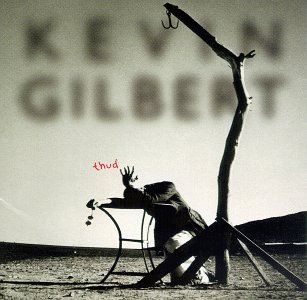
Kevin Gilbert - Thud
Coming off the dissolution of art rock semi-supergroup Toy Matinee and the more freshly released debut smash of his then-girlfiend Sheryl Crow's career, Kevin Gilbert's first and unfortunately only fully-finished solo album Thud should've been just the first step of one of the more consistently fascinating singer-songwriters of the 90s. Shedding the prog rock excess of his previous work, Thud is far less self-conscious and pompous than the sometimes tiring squeaky-clean sheen of Toy Matinee got to be without losing any of the songwriting punch. Sadly it would end up becoming his only truly complete solo work aside from the stitched-together remains of his grandiose rock opera follow up The Shaming of the True.
Don't mistake a lack of art rock gloss for a "heavier, rawer" approach, though - Thud treads much of the same adult contemporary pop/prog ground that Gilbert had traversed before, just at a less frantic pace this time as more laid-back pieces form the bulk of the material, from the sleepy sing-a-long "Tears of Audrey" to "Joytown"'s darkly shuddering groove and the strangely familiar-feeling intro acoustic number "When You Give Your Love To Me". Gilbert indulges his Genesis-loving side only on a few select pieces, in particular the album highlight "Shadow Self" which is blessed with, among other things, a bass line so firmly in the pocket it would make Doug Wimbish jealous and "Waiting", a textbook Gilbert song if there ever was one: off-kilter arrangement, lyrics that lean heavily into black comedy, and a chorus that never takes the easy way out. Other highlights include the infectious toe-tapping polemic of "Goodness Gracious" and the lush backup vocals and lilting sway of "All Fall Down" while more pedestrian selections such as "Shrug (Because of Me and You)" and "Tea For One" are enjoyable but feel like they lack a certain oomph that would elevate them into the same altitudes as the other tracks.
From a production/technical standpoint, Thud is just as excellent and clear-sounding as you would expect from these types of industry veterans. Gilbert's voice is sharply audible and just loud enough to cut clearly through the the tracks without sacrificing the breadth of sounds provided by the backing instruments and the whole thing sounds quite simple and pleasant - definitely easy on the ears, with a nice dynamic range in the teens. And with the whole gang packing it in before the 50 minute mark is reached you've got a nearly perfect run-time as well. It's a rare piece of art that can provide such strong returns on such a meager investment, and that makes Thud more than worth the trouble of digging it up.
Wednesday, September 27, 2017
Brand New Immortals - Tragic Show
Stealthily dropping while soft rock hits from Alicia Keys, Janet Jackson and Matchbox Twenty were ruling the roost, Tragic Show is the first and only full length product of the union between singer-songwriter David Ryan Harris (think Dan Wilson if he hadn't met up with Adele), formerly of Follow For Now cult-fame; drummer Kenny Cresswell, who went on to work with Avril Lavigne (remember her??) and Candlemass; Johnny Colt, former bassist for The Black Crowes. Produced by Brendan O'Brien, who also worked with The Black Crowes and produced King's X's Dogman album, Tragic Show is one of the better obscure albums you might find in the $2 rack. As confident as any post-grunge mid-00's band banking on a middle-school-dance-friendly power ballad to take them to the top but packing the songwriting and production heat of industry titans, Tragic Show is a master class in song craft that would make even Kevin Gilbert jealous.
Ballads seem to stick to supergroups more strongly than rubber cement to model car parts and Brand New Immortals are no strangers to the sappy stuff. Late album slow-burners like "Satellites" and "Ill Conceived" would normally ruin any semblance of momentum that the previous tracks had accumulated but... well, Tragic Show has more hooks than your local Bass Pro Shop and even these mid-tempo pieces fail to bring the record down (particularly the spot at 5:10~ of "Ill Conceived" which is straight-up Zeppelin worship) as the atmosphere built by them never feels fake or out of place. Coupled with O'Brien's talent/obsession with creating and recording incredibly full band sounds, the guitar and drums thankfully never suddenly evaporate as they tend to do during other bands' softer moments. It isn't until the trio really opens up the throttle on more strident numbers like "Blacksun", "High Time" and "Let Me Up" that O'Brien's production really pays dividends though, as the fullness of these tracks elevate the material which would've been strong enough on its own. The term "heavy melody" was originally coined by producer Sam Taylor to describe King's X's early sound but I find it applies to Tragic Show as well as these pieces, in particular the aforementioned 3 fatter tunes, orbit around choruses that are downright bouncing. I still tend to think that the slower tunes drag what a might have been an utterly spotless rock record down a notch, but they have been growing on - in particular "Satellites" and "Ill Conceived", which I find is a lovely send off to the whole thing.
After all is said and down, Tragic Show is a stereotypical rough gem: arresting when held up to the proper light, but not without some rough edges.I emphatically recommend it for anyone interested in an album that arrived a couple of years too late to really make a splash while still bearing the mark of top-notch writing and production.
Ballads seem to stick to supergroups more strongly than rubber cement to model car parts and Brand New Immortals are no strangers to the sappy stuff. Late album slow-burners like "Satellites" and "Ill Conceived" would normally ruin any semblance of momentum that the previous tracks had accumulated but... well, Tragic Show has more hooks than your local Bass Pro Shop and even these mid-tempo pieces fail to bring the record down (particularly the spot at 5:10~ of "Ill Conceived" which is straight-up Zeppelin worship) as the atmosphere built by them never feels fake or out of place. Coupled with O'Brien's talent/obsession with creating and recording incredibly full band sounds, the guitar and drums thankfully never suddenly evaporate as they tend to do during other bands' softer moments. It isn't until the trio really opens up the throttle on more strident numbers like "Blacksun", "High Time" and "Let Me Up" that O'Brien's production really pays dividends though, as the fullness of these tracks elevate the material which would've been strong enough on its own. The term "heavy melody" was originally coined by producer Sam Taylor to describe King's X's early sound but I find it applies to Tragic Show as well as these pieces, in particular the aforementioned 3 fatter tunes, orbit around choruses that are downright bouncing. I still tend to think that the slower tunes drag what a might have been an utterly spotless rock record down a notch, but they have been growing on - in particular "Satellites" and "Ill Conceived", which I find is a lovely send off to the whole thing.
After all is said and down, Tragic Show is a stereotypical rough gem: arresting when held up to the proper light, but not without some rough edges.I emphatically recommend it for anyone interested in an album that arrived a couple of years too late to really make a splash while still bearing the mark of top-notch writing and production.
Living Colour - Shade
I have to something to confess: I haven't to anything Living Colour has put out more than half-heartedly since Collideoscope dropped in 2003, which itself was their first release since Stain put an end to a triple threat of excellent records 10 years prior. A couple of months ago I stumbled on their first EP released since before I was born entitled Who Shot Ya?, which was basically a cover of The Notorious B.I.G.'s titular track packaged with a couple of remixes by other artists. I saw that they had actually done a music video for the song and gave it a shot, curious to see how these guys had aged in the last decade and a half (the video itself is pretty good, if you haven't seen it yet and like hip hop or rock I recommend it). More than anything in the video itself I was blown away by Vernon Reid's guitar tone as I had never heard it sound so thick and chunky - he's always been an amazing player long suffering from a less-than-befitting tone which was never quite as full-throated as I would have liked, even at his heaviest. Who Shot Ya seemed to indicate a change to all that and when the full album Shade finally arrived after many years of delays, setbacks, and scheduling conflicts, I was very pleased to discover that his tone hasn't sounded this good in a long, long time. Truthfully his guitar and Doug Wimbish's bass both sound so huge I would've believed you if you had told me Brendan O'Brien had produced the album.
In reality Shade was produced and partially engineered and written by Andre Betts, a low-key industry vet with production and writing credits from the likes of Madonna, Lenny Kravitz, and Living Colour themselves. Credit where credit is due: Shade blasts out of the gate with all cylinders firing and basically never lets up until the last track is finished, which unfortunately don't quite end things on a super satisfying note despite a nice feature from Celebrity Jeopardy stary George Clinton. The pieces that work the best here are the ones most liberally soaked in the blues: the fantastic trombone and keyboard accent of "Who's That", the so-low-its-almost-crawling cover of Robert Johnson's "Preachin' Blues" and the straight-ahead blues rock of muscular opener "Freedom of Expression (F.O.X)", although that isn't to say the more hard rock oriented tracks disappoint. "Pattern in Time" sounds like a time capsule stretching back to the group's early 90's sound from their first two albums while unassuming foot tappers like "Invisible" and "Blak Out" are just plain groove machines. The thick, raw production really elevates the material here and erases any doubt that Living Colour might have lost their bite, even as they focus more heavily than ever before on topics of racism and inequality on the aforementioned "Who Shot Ya", "Program" (Why do I only ever hear black groups doing little skits like the one at the beginning of this song? It does a lot to humanize these bands) and a nice cover of Marvin Gaye's "Inner City Blues" to round the whole package out. I mentioned the production before but I really have to stress again how rich of a an experience Shade is sonically. Doug Wimbish in particular sounds better than ever (think Rick Skatore on Strength In Numbers or Heavy Metal Soul By the Pound or dUg Pinnick on Dogman) while Corey Glover's pipes don't seem to have worsened with age an iota (his enthusiasm is infectious, especially on "Invisible", "Blak Out", and "Who's That"), and I've already noted how much fuller Vernon Reid's guitar tone is here. If it seems like I'm singling out stickman Bill Calhoun I'm really not, truthfully he's just been giving the same insanely tight performance for the last thirty years so it's hard to find much to say besides "he killed it again here". I find that the he isn't quite as in the pocket as he was on Stain but that was almost 25 years ago.
Shade certainly isn't subtle either musically or lyrically, but I don't think that's a bad thing in its case. As someone who has been listening to this band for a while it's a bit difficult to divorce myself from that experience and put myself in the shoes of someone who has never heard of Living Colour, much less the idea of an all black hard rock outfit. I like to think that Shade being released at this point in time with it's socially aware lyrics and Mike Brown liner artwork is less of a re-invention to the band's core audience and a wake-up to a larger music industry complex that found a place for Pharrell and Kanye but left this group, 24/7 Spyz, Follow For Now and others to fend for themselves in a post-grunge landscape. These groups have been a revelation to me in the last few years, and I can't even imagine the impact hearing a song like "Program" or "Preachin' Blues" would have on a black teenager in this era (if they dig it). More than just a collection of good tunes, Shade is a shoreline beacon for the next generation of disaffected youth of America that have grown tired of the current pop music scene.
Friday, September 1, 2017
Mafia III: One Year Later
Mafia III has generated a lot of strong reactions in the year since it's release, with many comments focused on its buggy initial release to its film-quality cutscenes and beefy, immensely satisfying gunplay while the game as a whole seems to have slipped into the back of peoples' minds while developer Hangar 13 plugged away for a year, releasing a major DLC expansion every couple of months until finally calling it after July's offering, Sign of The Times. While I think all of the DLC is worth the entry price, I don't think I'm going to cover how it all shook out in the same way that I talked about the base game, especially as Noah Caldwell-Gervais just put out another solid video going over exactly that and I'm still figuring out how what I think about all of it. If I had to give a quick hits list, I would say Stones Unturned is my favorite and the overall most well-done despite it throwing the "grounded exploration of racism" vibe of the base game out with the bathwater, out of the Sears Tower.
Faster, Baby! and Sign of The Times both have problems with their relation to the tone of the base game as well, but Stones Unturned felt much more committed to a singular tonal experience and consequently a bit more compelling to follow. Yes, that experience was naked Predator worship but the DLC's island setting was stunning and the focus on linear combat arenas, plus the new toys gifted to Lincoln along the way made the experience more than just passable. To me the cracks showed more visibly in the other 2 DLC packs as they failed to mesh their gameplay with their tones - the pairing of stunt driving a la The Dukes of Hazzard with violent rural bigotry in Faster, Baby! is about as natural a duo as you can imagine and Sign of The Times' earnest and very affecting portrait of a person who was psychologically ruined by a freaky cult features slo-mo gun battles in nightclubs with knife wielding Manson sisters who cruise around in funny car hearses with motherfucking Addams Family spiderweb grills. Also, there are "psychedelic" drug trip sequences because why not. So maybe Stones Unturned is my favorite because it just picked 1 thing and did it well without stretching itself out over a thinner, more repetitive sequence of missions like the other DLCs.
Past the DLCs and their individual experiences, though, I wanted to talk about an aspect of the Mafia III package that I haven't seen as many people mention as I would have figured: its presentation, from graphics to UI, and music choices in both its licensed soundtrack and original soundtrack. Because this game has some of the strongest presentation and sense of style that I have experience in quite a while.
Presentation
Lighting
Since Mafia III does not have a photo mode its difficult to produce screenshots that really do the lighting system at work here justice, but I've spent some time trying anyway and so have some other auteurs. Take a look:
No screenshots of the pre-rendered scenes, because that is cheating. Everyone has already mentioned how utterly amazing they look, and I am in complete agreement. I've played through Mafia III 3 times at this point and still find myself glued to the screen whenever a scene is playing, no matter how trivial. They're all executed with such style and pathos (as is the writing), and the performances are rendered so powerfully, particularly by Alex Hernandez, who plays Lincoln Clay, although truthfully the whole cast of characters is wonderfully portrayed.
Anyway, the lighting. You can probably tell by the daytime shots above that there is a noticeable amount of blur present, and while it isn't something everyone enjoys I feel like it fits the cinematic nature of the game. When you choose to open the main menu with a countdown reel and frame the whole narrative as a years-later documentary it tracks that the resulting images will be a bit more film-like than life-like, and while the overexposed sunlight can be a bit frustrating when it blocks out the road during the sunrise, it is more than when worth it when you find yourself in the bayou at a quiet moment as the wind breezes through the trees and the warm orange Louisiana light seeps through the canopy. Nighttime is where the lighting truly shines, though, as billboards and neon signage cut through the darkness and the rich interior illumination of bars, clubs, and even modest homes lend a real sense of place to the environments of New Bourdeaux. It's also the best time to enjoy the many minute details that dot the game's world and objects that contribute significantly to immersion, mostly related to the cars. Such as:
- The reflection of lights on car exteriors is fantastic at this time. Reflections also bounce of chrome bumpers and trim with equal fidelity, unlike during the day when they just look off.
- Headlights and taillights turn on & off slowly as the bulbs heat up/cool off instead of the instantaneous on/off of modern halogen lights.
- Car bodies shift noticeably when people get in and out, as well as when you turn the wheels while the car is stationary.
- Exhaust pipes start rattling once the car is started and fumes are only visible issuing from the pipe when the car is actually revving.
- A handful of cars in the game are customizable and feature different Mad Max-sized blowers that can be installed. Some of these are visible jutting through the hood a la the Black On Black's famous Weiand supercharger while some have custom hood scoops modeled specifically for that ride. Another little thing, but a nice touch all the same.
There are also a couple of more simulation-ish mechanics supposedly functional in the game code that were either removed during development such as the need to manage your car's fuel gauge and occasionally top up, and methods for the engine to track tire traction by factoring in different treads and fuel levels (!). Whether or not it was a good decision to remove these pieces is not the point of this piece, but even as Mafia III stands today it is obvious that a huge amount of work went into the design, modeling, and texturing of the cars in this game and in my mind it really stand out as great stuff. The Mafia series has always been a period piece and American cars a huge part of the time and place that is part of all of the games in this series, and Mafia III impresses in that area.
Audio
Like all period pieces, the visual side of things is only one piece of the puzzle. Creating and utilizing a suitable stable of sound effects and tracks is essential for building and maintaining the atmosphere Hangar 13 was trying to create here, and Mafia III is probably more successful in this realm than the visual aspect of its presentation - at least, I've heard a lot more people praising the soundtrack and included licensed songs than the graphics outside of the custscenes, and probably for good reason. The combination of original music and licensed tunes is so strong and well-used in this game I have a hard time of thinking of other examples that do a similarly good job. Like Grand Theft Auto, Mafia III's are never really mentioned or commented on by the game itself, unless you count the collectible album covers in the latter which seems like a stretch. The original pieces recorded specifically to fill out the game's aural space remind me of Red Dead Redemption in how they so excellently match the tone and feel of the game's themes while elevating the minutia of the experience like loading screens, small repetitive bits of combat, etc. Then there is a third group of pieces that could probably fall under the "Original Soundtrack" heading as they are found solely out in the open world as the "b-sides" of Mafia III, popping out from stereos, leaking audibly out of houses, and filling the jazz clubs found in the game's version of the French Quarter.
The influence of popular music in Mafia III cannot be overstated. Between the softly plucked notes of the OST accompanying the concept-art loading screens and menus and the naturalistic beauty of the title screen featuring Jimi Hendrix's iconic cover of "All Along The Watchtower" swirling all around, even the more technical "game-y" elements aren't permitted to deviate from the atmosphere Jesse Harlin and Jim Bonney's rich score have woven. Normally the main menu of a video game is the least immersive piece of it, affixed with a grid of options for tweaking controls and deleting old save files, but Mafia III's main menu has none of that: two simple options - continue, and new game. The PC version has a bit of a cop-out in the form of a splash screen menu that comes up before the game properly launches allowing you to tweak settings but it's clear that even the under-the-hood maintenance of difficulty settings and different resolutions are intended to be just as much a part of the Mafia III experience as the actual gameplay. The title screen's heavily stylized nature reminds me of similarly pathos-drenched titles like those of Frictional Games, notably the gut-twisting dirge of Amnesia: The Dark Descent and the harsh glitch-horror aesthetic of Soma; Red Dead Redemption remains the closest point of comparison in terms of atmosphere and sound design to Mafia III in my mind.
Original Soundtrack & Other Assorted Noises
The original soundtrack is a rich stew of delta blues, swamp rock, and quietly plucked acoustic mood pieces that accentuate combat and cutscenes, never actually playing while the player is just roaming around, which is an interesting choice. If you're in a car then it obviously makes more sense to just listen to the radio but if you're pounding the pavements you are left with the raw sounds of the city to occupy your ears - cars fading into and out of earshot, the idle conversations of NPCs around you, and snippets of muffled songs faintly heard playing from within houses and buildings. While the conversations between NPCs are generally pretty funny and decent enough at selling the period (discussing that goofy new show Star Trek or remarking on L. Ron Hubbard's fantastic new book), the sequestering of the OST tunes into combat arenas and discrete story moments is maybe more common than I am aware of, as I have not played any open world games besides the Far Cry series and Mad Max in the last couple of years and both of those games weave their music into their minute-to-minute gameplay which I assume is the default way of implementing soundtracks. I would be curious to see if GTA V does this as well?
The rest of the music you'll hear outside of licensed material is more ephemeral - random jazz tunes and other forms of semi-elevator music not really significant enough to be included as part of the OST proper apparently. Just like Red Dead Redemption with it's saloon piano pieces! I haven't been able to find any credits for these tracks so I'm not sure who to give credit to for them, but they are another square in Mafia III's atmospheric quilt ranging from free jazz to instrumental slot-fillers on the radio to commercial jingles and more.
Licensed Songs and Radio Programs
Here we get to the real meat n' potatoes of Mafia III's audio - 100+ tracks ranging from set-in-stone classics (Rolling Stones, Jimi, Aretha Franklin) to long forgotten standards (CCR, Sam and Dave) down to (as someone who was not alive in the 60's) some fairly deep cuts, in particular "Needles and Pins" by The Searchers which is just bizarrely funny to me as a longtime Megadeth fan . That "100+" number seems a little high to me as someone with 120 hours in the game, because I experienced a lot of repeats on the radio during my time with Mafia III but whatever. This is the part of Mafia III people mention the most besides the cutscenes and for good reason, because it is incredibly impressive how well the soundtrack fits this game. You could write a whole essay on the relationship between the game and just Credence Clearwater Revival's music as it fits the game so well it's almost scary. Fuck, maybe I will because blasting through the bayou in a knockoff Ford Torino with "Born On The Bayou" piping in through the speakers is way way way more enjoyable and thematically on point than you would think it is reading it on a screen. Of course if you aren't a fan of AOR than you probably won't be spending too much time with the dial cranked but if you were willing to try the game at all I think you self-selected for enough of a tolerance of vaguely cinematic historical stuff that you will either grin and bear it or find something else to enjoy with the game.
Anyway, the final piece of the auditory puzzle I wanted to mention is the nature of the radio programs in Mafia III because they are a bit different than the ones you have heard in GTA and Saint's Row. There are only two actual "shows" in the whole game (three if you count the news bulletins that chime in about the latest interchangeable Sopranos extra that you rapidly ventilated and sprinkle in references to topical news events), one being a kind of revolutionary BLM type after hours rant (delivered by the golden-voice goodness of Dave Fennoy) and the other a landed-gentry polite racism talk show. What is most interesting to me about these smaller chunks of the radio content is how easy they are to miss, because as far as I am aware none of them are mandatory even though they are queued up to coincide with particular story beats, and they are surprisingly lengthy, coming to a total of about an hour of runtime throughout the game's narrative. If you aren't interested in buying the game just for the opportunity to listen to the in-game radio you can check out one of the shows here .
Subscribe to:
Posts (Atom)