Monday, August 8, 2016
No Man's Sky: Sean Murray x Todd Howard
As we draw nearer and nearer to the much anticipated (understatement of the year?) indie darling No Man's Sky, the increasing degree of toxicity displayed among the fanbase and the general gaming community has been an unfortunate, if understandable, display of tall poppy syndrome as onlookers were treated to a roller coaster ride of leaked gameplay, shattered hopes, rekindled hype, and a healthy helping of crabs n' salt. All drama aside, the game is going to be out soon and hopefully hitting the ground running thanks to an (apparently) much needed and surprisingly thick day one patch. No Man's Sky launch has also been memorable as the only time that I can remember large video game publications breaking review embargoes to host gameplay on their sites before the game was even released, notably by buying copies of the game from retailers who had broken the August 9th street date so they could stream it for themselves. I understand that review embargoes are shitty for everyone except publishers, but seeing professional journalists resorting to this kind of behavior just seems petulant - you couldn't wait like to get your clicks for a few more days?
Besides all of the drama (and there's plenty more where that came from) I can't help drawing a comparison from all of this stuff to Bethesda and Todd Howard, aka the Patron Saint of Steam Sales. Bethesda games, similar to No Man's Sky, take place in vast worlds filled with a bulging, nearly "limitless" amount of stuff to do and see driven chiefly by the player's own exploration. Bethesda games are also massive hype machines with maybe the most fervent, let-them-get-away-with-murder type of fanbases visible in mainstream gaming despite a routine amount of bugs, technical glitches, poor optimization/ UI decisions, and general writing that belie their success. When some of the all-time most popular mods available for your game are bug fix compilations, you know you have something pretty special on your hands. Hello Games' Sean Murray has been catching flak for his "lies" regarding a range of No Man's Sky features in a relatively short period of time, while Todd Howard has a pretty well documented Spin Zone tendency that has really never backfired. Since Bethesda games are pretty much universally smash hits, that must mean that either 1) the people who care about this stuff are such a small minority that it doesn't effect Zenimax's books either way (very likely) and/or 2) those same people end up buying the game anyway after they disperse enough energy grumbling on forums (almost certain).
I'm not saying Todd Howard or Sean Murray shouldn't be held accountable for the shit they say - they absolutely should, with the important caveat that these people are salesmen. Yes, they put enormous energy into these projects that they care deeply about, but they want you to buy that product enormously as well, so of course here and there they are going to splurge and let out a half-truth to drum up additional interest. As someone who has spent waaay more time playing Bethesda games than I will probably ever play No Man's Sky, I just find it interesting that people continue to support these massively buggy, ugly, and outdated Elder Scrolls / Fallout games while leveling so much more (comparative) criticism at Hello Games' first big effort when early, pre-patch gameplay has shown it to be infinitely more stable and bug-free than, say, Fallout 4 or *shudder* New Vegas was at launch. While I'm not personally incredibly grabbed by either Hello Games or Bethesda titles much anymore, No Man's Sky is definitely promising to be a very interesting experience.
Wednesday, July 27, 2016
Pinnick Gales Pridgen - Pinnick Gales Pridgen
Trust me, I didn't start this blog intending for it to be a catalog for all of dUg Pinnick's various side projects - it just happened. Today's example is the debut album from - you guessed it - supergroup Pinnick Gales Pridgen, a - you guessed it - an outfit specializing in hard // psychedelic rock, blues, and funk. Pinnick is well within his weelhouse here alongside guitarist Eric Gales (who plays guitar upside-down a la Hendrix, as does Pinnick) and ex-Mars Volta stickman Thomas Pridgen: Pinnick Gales Pridgen is an hour-plus long buffet of blues rock goodness that covers everything from instrumentals to ballads, but the wide breadth of material contained here makes for a record that feels less than the some of its parts at times.
Opening cuts "Collateral Damage" and "Angels and Aliens" start get the sled moving at a brisk pace, with Gales' tastefully biting licks finding a natural partner in Pinnick's all-encompassing backup harmonies. A short interlude, "For Jasmine", gives us a breather as we dive into the album proper: "Wishing Well"' and "Hate Crime" simply ooze dUg with their impassioned delivery and slow rolling riffs, "Been So High (The Only Place To Go Is Down)" is over ten minutes of honest to God Delta blues and Gales' playing continues to impress on "The Greatest Love" and the album's lone cover "Sunshine of Your Love". Pridgen keeps up with his bandmates but his playing on this record seems more locked in with the groove than above it - certainly not a bad thing given the material. Speaking of, PGP isn't something for those lacking in time: the runtime tops out in the 70 minute range and there are only 2 tracks flying in under 4 minutes, which prove to make this album less of a pleasure than it should be. The boys take plenty of time to wring these songs of every drop they can, which has the side effect of making PGP drag its feet in places, particularly the back 9: "Black Jeans" could be half as long as it is with no lost love, but and "Angels and Aliens" and "Hang On, Big Brother" might've benefited from some trimming as well. As it stands, though, Pinnick Gales Pridgen is much more good than bad as nearly every song stands out on its own as a well-crafted rock song. Long in the tooth but certainly worth keeping in rotation.
C+
Thursday, July 14, 2016
Vektor // Haken
Possibly the most hotly anticipated release of the year, Arizona-based Vektor has quickly ascended to the top of the rethrash heap, fueled by their deep space flavored blend of blackened prog-death-thrash. Terminal Redux fills its disc up with a hefty runtime of 73:21, offering these boys plenty of rope to hang themselves with only for them to burn down the gallows and piss on the ashes: Vektor's engines are burning at full power from the opening crush of "Charging the Void" and they don't let up for a good 40 minutes before we get a respite with the cosmic melancholy of "Collapse" before burning up in the atmosphere with "Recharging the Void". Crafty writing ensures that you're never more than a couple of minutes away from a more melodic passage to snap things back on course while nearly every song has something special to demarcate it: from the planet-sized groove of "Pteropticon", "Pillars of Sand"'s careening bleakness, to the chunky sci-fi of "Psychotropia" nearly every song contributes to the album's narrative while standing out as fantastic blackened thrash in it's own right. Add a dash of spaced-out choir vocals on the bookend tracks and you have Peter Watts in space - a heady twist of the depressing limits of human life mixed with the untold possibilities of the cosmos.
B+
I can't remember the last time I flip flopped my opinion on an album this hard. Upon it's release I considered Affinity one of Haken's least interesting works, featuring boring songwriting and flat production - pretty much the opposite of what I consider it to be at this point. I do still have some problems with the production, but it wasn't enough to keep this album from basically living in my car the last 2 months. While it doesn't quite reach the same heights as The Mountain did it comes damn close: "1985", "Earthrise", "Lapse", and "Bound by Gravity" are all absolute gems and even at the low points ("Initiate", "The Endless Knot") the album flows by a noticeably faster pace than their previous work, making for a 61 minute-long album that seems much shorter than it should. Well-layered lyrics paint a vibrant picture of the rise of artificial intelligence, the arcane workings of the human mind, and the aftermath of the sun's eventual death, while some of the band's most focused and powerful songwriting and album design (credit goes to the fantastic Blacklake Design for knocking this out of the park just as hard as they did The Mountain) seals the deal. Affinity proves that The Mountain wasn't just a fluke as the band moves forward, each album stronger than the last, into the future.
B+
Friday, July 1, 2016
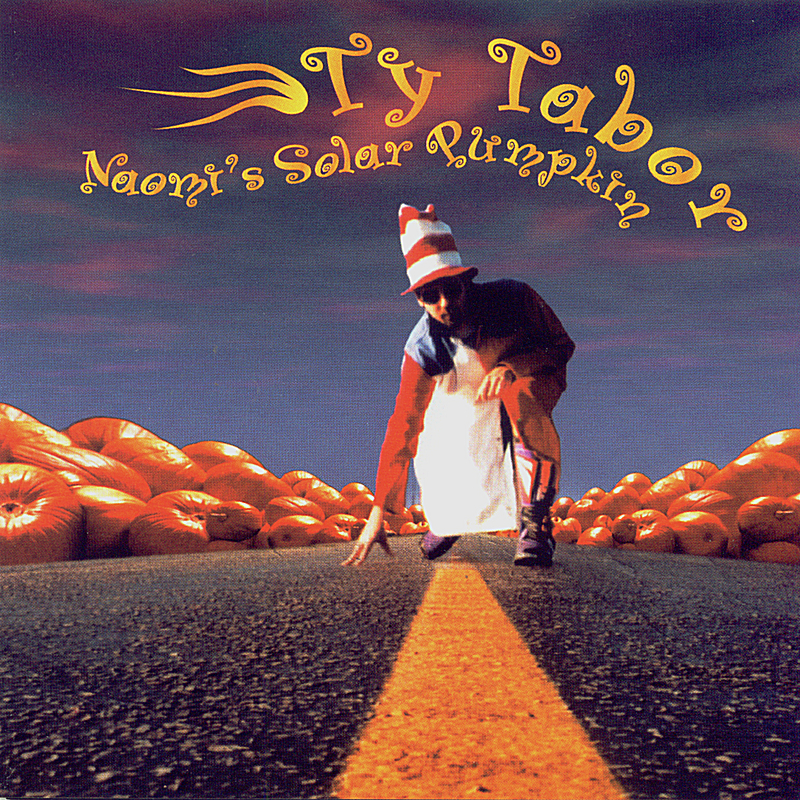
Ty Tabor - Naomi's Solar Pumpkin / Moonflower Lane
Striking out on his own first among his bandmates, guitarist Ty Tabor's first solo release quietly released via mail order to fan club members in 1996 stands tall next to his longtime partner dUg Pinnick's initial solo offering, Massive Grooves..., as a concentrated shot of all the things Tabor fans would want: a laid back atmosphere, Beatles-esque vocals (John Lennon in Ty's case), and his distinctively sinuous guitar playing, and Naomi's Solar Pumpkin succeeds in delivering just that.
Like Massive Grooves, there's a novelty to hearing so much of someone's writing and playing that's normally balanced out with two others on early solo albums to help cover the spread of any songwriting deficiencies and to keep the memory of any clunkers overly rosy. I think that, on the whole, Ty is a better composer and writer than anyone else in King's X and it especially shows on his first two solo albums (Moonflower Lane is basically Naomi's Solar Pumpkin Remastered): alternating between understated foot-tappers like "I Know Everything", "Had to Move", "Boy to Man" and "Hollow Eyes" and layered ballad-type pieces in "Without You", "That's All", and "Walk With My Love", Tabor displays a level of competence at power-pop that is rarely seen. Handling all instruments himself and keeping the runtime tight, Tabor produces an excellent little piece of melodic hard rock.
B+
Wednesday, June 29, 2016
dUg Pinnick - Naked
After most of the 00's bumming around with a slew of side projects and extending his resume with a long list of guest appearances dUg dropped his most recent solo album since 2007's Strum Sum Up with 2013's Naked. As was the norm for his earlier records everything you hear is done by him, but Naked stands out from his past releases chiefly thanks to dUg's first attempt at providing his own drumming rather than getting his partner in King's X Jerry Gaskill to pound the skins for him.
Although I've listened to Pinnick's previous solo albums prior to hearing Naked none of them really grabbed me besides his debut, Massive Grooves From the Electric Church of Psychofunkadelic Grungelism Rock Music and portions of his next one Pineappleskunk. Massive Grooves pretty much sums up Pinnick's style of music, and this newest apple doesn't fall far from the 12-string tree. Opener "What You Gonna Do?" casts a plaintive light over the rest of the record while darker numbers like "Heart Attack" and the weirdly ominous "Take Me Away From You" let everyone know that happiness and friendship aren't the topics at hand. dUg is a plain dude and this is a plain record - there really aren't any tricks he's got up his sleeve besides him doing his own drumming, and... well, let's just say that there's a reason Jerry did the drumming in King's X and not him. The first couple of songs actually sound quite good - "If You Fuk Up" and "Courage" are solid no-frills rockers and that Pinnick crunch we all know and love is plentiful on tracks like "Take Me Away From You" and "Speeding Love".
Things run out of steam towards the end as the song lengths start to elongate. "I Hope I Don't Lose My Mind" works but "Heart Attack", "The Point", and "I'm Not Gonna Freak Out" really stretch the limits of the compositions on offer here, especially as Naked never gels together completely - either the drumming stumbles, or a verse gets repeated once too often or slips into trite-land, or dUg's vocals are astoundingly mixed too loud and drown out the music. His talents as a bass player, vocalist, and writer are all indisputable, especially with all the high quality work he's been putting out with KXM and PGP, but all of them mixed into the same pot without anything else ensures that too much of the material here just never gets off the ground. While Pinnick is assuredly at his best as part of an ensemble, Naked isn't a total write-off - but if you're just getting into his stuff, I would look elsewhere for an entry point.
C
Tuesday, June 21, 2016
Mafia 2
![]() |
| Credit goes to nukke for this sick design
Since Mafia III is shaping up to be pretty interesting and Mafia II just got re-released on Steam for a measly $5, I figured I would give it a shot to figure out why fans seem so protective of this little series of open-world interactive Goodfellas reenactments. Turns out that the answer is close to why people have had such a fascination with the real-world Mafia: they both possess a suave, charming exterior that makes it hard to process the fact that they're responsible for some truly twisted shit. Mafia II, like the organization it's creators are so clearly enamored of, is fast-talking and reasonably good-looking on the surface but the calm waters on top mask an undertow of textbook development hell. While it's ambitions and heart were in the right place, the game exemplifies the state of "over-promise, under-deliver" that games caught in such a long development cycle can end up in.
The real reason fans of this game and franchise are so reluctant to see the series go mainstream is that for all the things Mafia II did wrong, it is, at the same time, almost shockingly ahead of its time in certain aspects. For one, the facial animations and cutscenes are top-notch, especially considering Mass Effect 2 released that same year, along with the overall art direction of the city, characters, and particularly the cars. You think George Miller likes cars? Taken along with the included physics-based driving model dubbed "Simulation" the game simply has one of the most enjoyable driving models I've played with, especially considering the time period of the events of the story which range from the mid 1940s to the late '50s - peak time for the American land-boat, and especially considering that GTA clones aren't known for really good driving mechanics. It's a good thing that the driving and cars are so enjoyable, Mafia II is similar to that gem Far Cry 2 in that both games force you to manually drive to your destination - Far Cry 2 actually has a better fast travel system despite that game taking place in sub-Saharan Africa. I'd say of the 14 hours I spent with Mafia II, a solid 5 of those were just driving to the next story mission.
Luckily, the story here is basically one long highlight. It's populated with well-acted, reasonable interesting characters, mostly you're standard Goodfellas types, but the voice acting is largely nicely low-key and convincing - more The Sopranos, less Joe Pesci. The writing for the characters and plot itself, which follows the life of Italian World War II vet Vito Scaletta after he returns from active duty and his life in the Italian Mob of Empire Bay, is also a standout component here, and while it isn't breaking any new ground for the genre, for a committed and largely self-serious period piece it works quite well. I found myself rushing to get to the next story beat just so I could enjoy more of the deliciously pulpy narrative as the cutscenes would frequently lure my dad in to watch, drawn by the comforting tones of that famous accent - incidentally, major props to the voice actor who played both Derek and Joe, Robert Costanzo, for knocking them both way out of the park. The story missions themselves are well-varied in their setups and objectives and it never felt like it was a chore (except for when I had to replay the same 20 minute sections over and over due to the bullshit checkpoint system). The animations and character models are also excellent, with the gunplay in particular being way better than I expected - every gun kicks and barks convincingly and the enemies are tough without being annoying bullet sponges for the most part. Handguns feel appropriately solid, especially the .44 Magnum with it's distinctive Dirty Harry report, and the shotgun and Tommy gun are incredibly satisfying to unload. You'll be ventilating a lot of deadbeat cocksuckers in your time with Mafia II and it honestly never feels dull.
Sounds pretty good so far, right? Right. Well, Mafia II definitely has it's rough edges and while it never got game-breaking bug level bad, I definitely had to take a break for a couple of days after getting super pissed off at the little annoying things that come with the package, like the way the checkpoint system saves about once every 30 minutes (seriously), meaning you'll be replaying entire missions over again in some cases if you fail partway through, or the way storing a car in your garage doesn't actually fucking save it - you need to progress the story to a checkpoint to do that. Or the fact that the only things you can actually do in the city that isn't a story mission is eat a burger, buy some clothes/guns, or get gas - yes, cars in this game will run out of gas periodically. Oh, and you can steal cars and drive them to 2 certain spots on the map to turn them in for cash, and look for collectibles.
So yeah, Mafia II is basically the definition of a flawed gem - if you're willing to look at it in the proper light, it's quite striking: a real passion project, with mountains of charm (I haven't even mentioned the music - actual, licensed classic Christmas songs!). In a dark room, though, it's just a lump of carbon - unnecessarily frustrating, predictable, and feature light. That said, I'm biased towards these types of games and am willing to forgive a lot for ambitious over-reaching, so the less-than-smashing success of Mafia II doesn't come as much of a surprise. While I'm doubtful Mafia III can be sanded down into a smoother experience without giving up a lot of what makes the series special, Mafia II will remain a very fun and very unique experience.
B-
|
Saturday, June 11, 2016
KXM - KXM
Another album I wrote about previously, KXM is the tersely named debut record of the hard rock super-trio of the same name, fronted by dUg Pinnick and staffed with Korn's former drummer and the guitar player of Dokken - not exactly my first picks for such a team-up. The last couple of years has seen Pinnick at his most prolific, releasing solo album #4 alongside his various side projects ranging from blues to psychedelia, so KXM's formation just seemed like another hard rock project. As it turns out, though, KXM is a bit more special.
Tonally, KXM's foundations are built on the bones of late-period King's X material - "Stars", "Human Friction", "Faith Is a Room", are the clearest call backs, but enough of the writing here is King's X-ish that I have to wonder if Pinnick was bringing in some excess material from the Ogre Tones or XV sessions for this one (and yes, there are harmony vocals too). While King's X is a clear point of reference throughout the record, the overall focus is more on delivering solid no-nonsense hard rock, and several of these tunes do that very, very well - "Stars", "Rescue Me", "Human Friction", and "Faith Is a Room" contain the perfect balance of barreling riffs and hooky choruses I've heard since, well, King's X last recorded an album. In particular the interplay between drummer Ray Luzier and guitarist George Lynch is what makes the playing on KXM stand out, although vocal performance by Pinnick is album-long highlight as well, as are the majority of the lyrics, which were also all penned by Pinnick along with the vocal arrangements. Pinnick's strength and weakness as a lyricist has always been his ground-level approach to wordplay: pieces like "Picture" and "Black The Sky" are stronger for it, but sometimes he's too on-the-nose (his solo albums are unfortunately good examples of this inconsistency). The topics covered are the usual suspects like love, loneliness, and faith, but hes seems to have a bit more fire in his belly this time ("Love", "Do it Now", "Gunfight") and it certainly fits the material on offer well.
KXM's biggest misstep, then, lies not in its material (although the songs are a bit too long across the board) but it's production - it's very loud, but not in a rich, Tape Head kind of way - more like a Death Magnetic brickwalled kind of way. I get some noticeable ear fatigue after playing it and Pinnicks' bass gets drowned under the wall of guitars a bit too often, but it's certainly not a dealbreaker but here's hoping for a DR score higher than 5 (the much-shit-upon production of The Flesh Prevails clocked in at 3) for KXM numero dos.
B-
Subscribe to:
Posts (Atom)